Why huge ID databases cause false KYC matches and how real-time, high-quality data fixes it.
By Simon Delaney • June 3, 2025
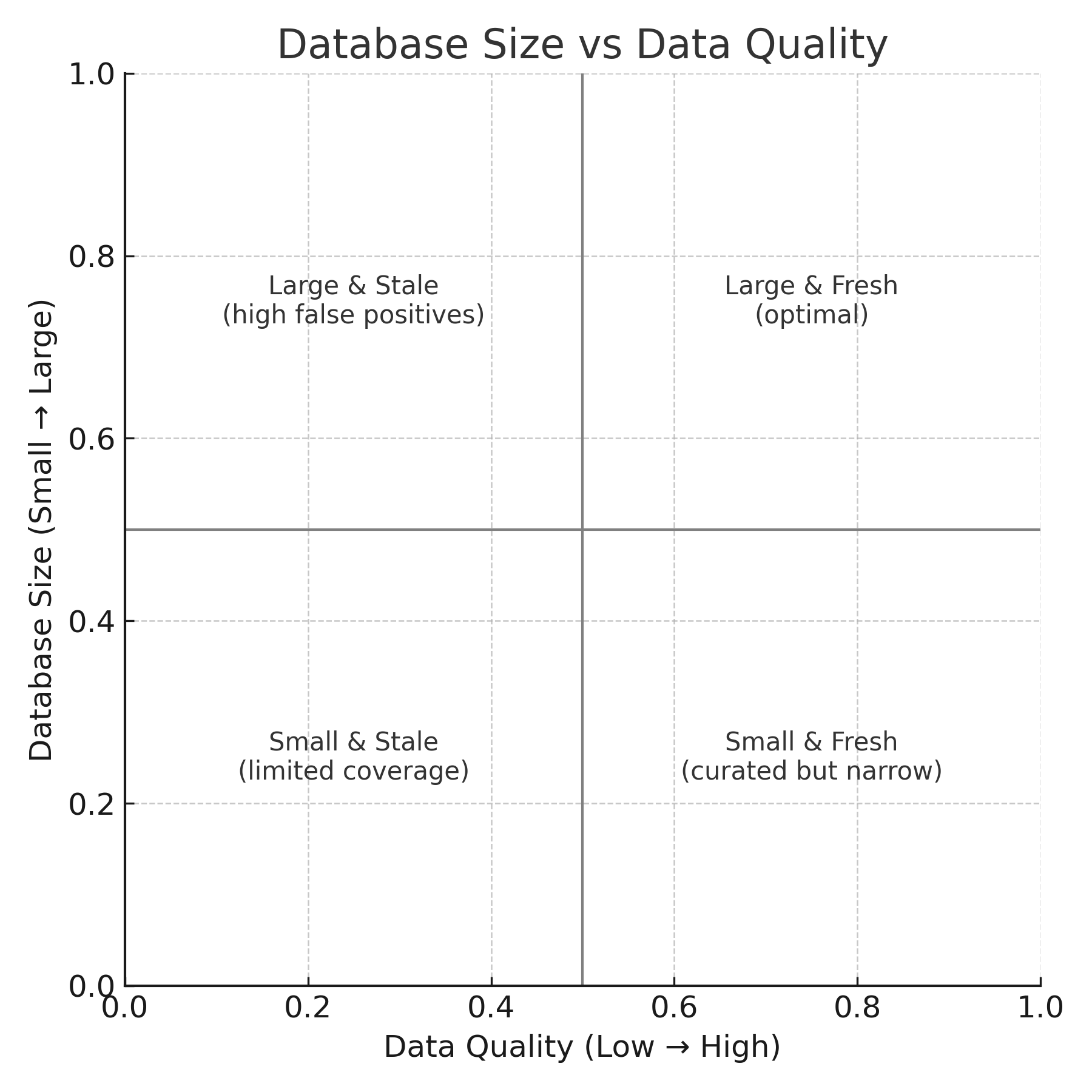
FTC: 1 in 5 credit files contains a serious error[^1] - proof that bigger isn't always better in ID data. Our analysis reveals why massive KYC databases often increase false matches and how curated, real-time data delivers better results.
Data Recency: The Stale Data Problem
Large KYC databases accumulate legacy data that creates verification problems. Credit bureaus hold outdated addresses, changed surnames, and obsolete status information - leading to false negatives when legitimate customers fail checks and false positives when old records create incorrect matches[^2].
TL;DR: Bigger databases often mean older, less accurate data - creating more false matches rather than better verification.
Data Quality & Source Legitimacy
Data source legitimacy matters more than volume. Marketing lead generators, public directories, and third-party brokers often provide unverified information that pollutes KYC databases with false entries and "lead generation fraud"[^3].
Breached Data Problem
Over 10 billion identity records have been compromised[^4] - more than the planet's population. Traditional KYC questions (maiden names, past addresses) are now "useless" since fraudsters can buy this data on dark web markets.
TL;DR: Data quality beats data quantity - unverified sources and breached data create more problems than they solve.
Sector Examples
Case Study: 2024 Upwork Account Freezes
Upwork's automated system flagged thousands of legitimate accounts when profile names didn't exactly match bank account names - showing how rigid database matching creates false positives[^5].
Case Study: 2020 KuCoin KYC Leak
Hackers exposed thousands of passport photos and personal details from crypto exchange KYC databases - proving that massive data collection creates massive security risks[^6].
TL;DR: Real-world failures consistently show that oversized databases create more verification problems than they solve.
Best Practices
KYC/AML Best Practices:
• Vet sources: Conduct due diligence on data origin and collection methods
• Prioritise recency: Choose frequently updated, verified information over volume
• Monitor and cleanse: Treat databases as living assets requiring regular cleaning
• Use smart matching: Deploy algorithms that handle variations without false positives
• Add dynamic verification: Supplement static data with biometric and behavioural analytics
FAQ
Do bigger KYC databases reduce false matches?
No - larger databases often contain more outdated and unverified data, increasing false positive rates. Quality and recency matter more than size.
How does outdated data create false KYC matches?
Stale records link identities incorrectly (false positives) or miss legitimate customers whose information has changed (false negatives). Legacy data reduces accuracy.
What's better than massive identity databases?
Curated, real-time data sources with verified provenance and proper consent. Smaller, fresher databases typically outperform massive legacy collections.